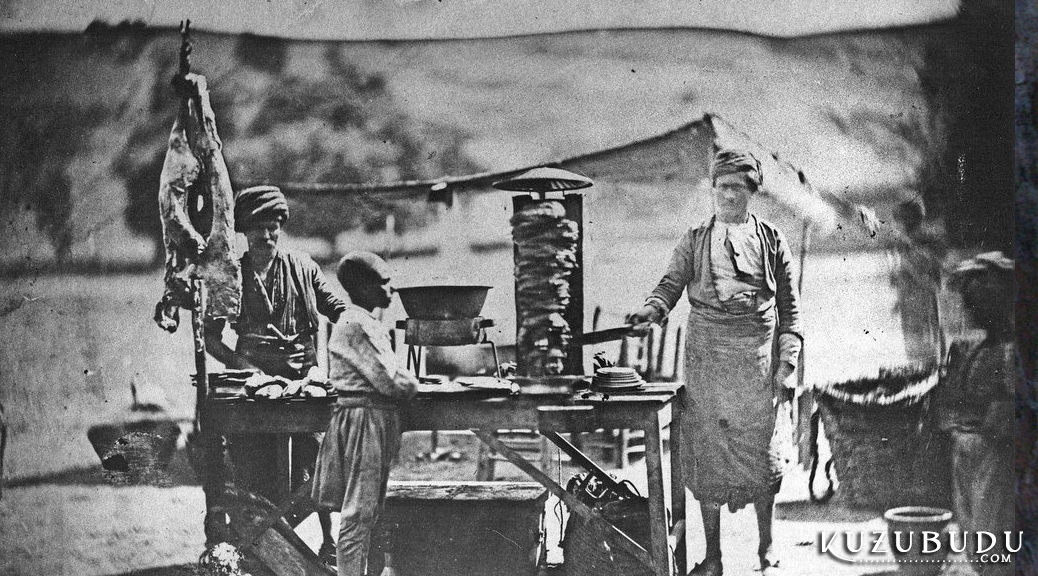
Bazılarına göre Türk – Osmanlı halk mutfağında “evde yenecek yemekler” ve “dışarıda yenecek yemekler” diye bir ayrım vardır. Bazı yemekleri evde yapmak çok zordur. Geniş bir kitle için yapılmayı gerektirirler. Az kişi için yapılabilme imkanları yoktur. Ayrıca evde yapılabilse bile bunlar uzmanlık gerektiren yemeklerdir. Bu yemekleri her gün yapan bir usta kadar iyi yapabilmek imkansız gibidir. Döner, kuyu kebabı, kuzu çevirme gibi yemekler bu sınıfa girer. Ziyafet sınıfının yemekleridirler.
Son yıllarda yurt dışında Türk yemeği denildiği an akla “döner” gelmeye başladı. Bunun en önemli nedeni de “fast food” kavramına bire bir uyan bir yiyecek olması. Bunun yanında yağ oranının azlığı ve istenirse ekmeksiz yenilişi de ona ciddi bir artı getiriyor.
Genellikle beraber sunulduğu soğanlı garnitürü dışında eksi puan almayan bu yiyecek kime ait? Pek tabi ki kahve, baklava hatta şiş kebabın kendilerinin olduğunu söyleyen Yunanlılar, buna da “gyros” adı altında bir sahiplik kulbu uydurmuşlar. Sadece Yunanlılar değil, Araplar shawarma, Meksikalılar da Al Pastor adı altında dönere sahip çıkmaya çalışanlardan. Ama bunların hepsi rivayete dayanan sahip çıkma istekleri. Tek belge ise Seyahatname’de, Evliya Çelebi’nden geliyor.
“Döner”in tarihçesi
Evliya Çelebi’nin anlattığı en ilginç yemeklerden biri de, Tatarların kış toplantılarında yaptığı bir kebaptır. “Koyun eti dilimlerini, boylarına göre demirden bir kebap şişine geçirerek ortası kalın, iki ucu ince bir şekil oluşturuyorlar, sonra kızgın ateşte pişiriyorlardı” Bu döner kebabın atası, ilkel hali vb. diye tanımlanabilir ama döner olduğu tartışma götürmez. Çelebi’nin bu kebaba gösterdiği ilgiden, daha önce hiç bir yerde benzerine rastlamadığını anlıyoruz. Çünkü Seyahatname’de yüzlerce yemek ve yiyeceğin adı geçtiği halde bunlara konan malzemeler veya pişirme tekniğiyle ilgili bilgiler fazla değildir der Mary Işın, Osmanlı Mutfak İmparatorluğu kitabında.
Bu noktadan sonra teknikleri ve malzemeleri de değişiyor dönerin. Örneğin Evliya Çelebi’nin anlatımına tam uygun olarak yatık olarak da pişirilebiliyor döner. Çünkü Evliya Çelebi açı konusundan hiç bahsetmemiş. Eti bu biçimde pişiren Erzurum da “Çağ Kebabı” ile dönerin üzerinde hak iddia ediyor. Kastamonulular ise Hamdi Usta diye bir aşçının icat ettiğini iddia ediyorlar fakat anlatılanlardan hiç biri, Evliya Çelebi’nin Seyahatname’de yazdığından daha eskiye gidemiyor.
 Dönerin yapım malzemeleri ve sunumu
Malzeme olarak kırmızı etin yanında tavuk, balık hatta sebzelerle yapılan vejetaryen döner bile denendi fakat hiç biri et döner kadar kabul görmedi. Bir iki vejetaryen döner denemesi ise oldukça alaycı eleştirilerden sonra ortadan kayboldu.
Sadece malzeme değil, malzeme biçimi olarak da farklılık gösteren bir yemektir döner. Kimi yerlerde ve müesseselerde kıyma ağırlıklı dönerler de yapılır fakat tat olarak etle imal edilenle karşılaştırılması mümkün değildir
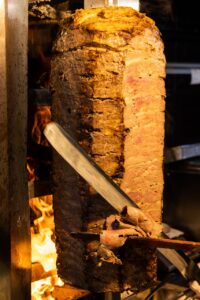
Ateşin karşısında, dikey olarak, ağır ağır pişen ve ince şeritler şeklinde kesilen dönerin pişme usulü, ona başka hiç bir ette bulunmayan bir lezzet verir. Sadece döner ustaları yani pişirip kesenler değil, hazırlayanlar da çok önemlidir. Büyük bir dönerin malzemesinin dizilmesi 4 – 5 saat alabilen oldukça zahmetli ve beceri isteyen bir iştir. Araya konulan malzemeler, yağ oranları vb her müessese tarafından meslek sırrı olarak gizlenir. Çünkü bunlar, dönerin lezzetinde, ona konulan et kadar önemli bir faktördür.
Sunuluş biçimi de farklılık gösterir döner. Tabakta porsiyon olarak; sade, sumakla ezilmiş soğanla, pilavla, ızgara biber ve domatesle, kızarmış patatesle, çeşitli çiğ ya da haşlanmış sebzelerle, acur ve biber turşusuyla ya da bunların bir kaçının beraber verilişiyle sunulabilir.
Elde yenmek için; ekmek arası, lavaşa (ince, pişmiş yufka) dürüm, pideye, tombik ya da normal sandviçe hazırlanır döner. İskender olduğunda ise üzerine kızgın tereyağı, yanına yoğurt, üstünde domates sosu ve altında pide ile ikram edilir.
Kömür ateşinde pişenin mi odun ateşinde pişenin mi daha lezzetli olduğu konusunda hep süregelen bir tartışma olsa da, günümüz şartlarından dolayı çoğu gazlı ya da elektrikli dikey ocaklarda pişiyor. Lezzeti mi? O da yapana göre gerçekten çok değişiyor.
DONER
According to some, there is a distinction in Turkish–Ottoman home cooking between “meals to be eaten at home” and “meals to be eaten out.” Some dishes are very difficult to prepare at home. They require preparation for a large group. It is not possible to make them for just a few people. Furthermore, even if they could be made at home, these are dishes that require expertise. It seems impossible to prepare these dishes as well as a master chef who makes them every day. Dishes like döner, kuyu kebab, and roasted lamb fall into this category. They are banquet-style dishes.
In recent years, when people abroad hear “Turkish food,” “döner” is the first thing that comes to mind. The main reason for this is that it perfectly fits the concept of “fast food.” Additionally, its low fat content and the option to eat it without bread give it a significant advantage.
This dish, which receives no negative points aside from the onion garnish it’s typically served with, belongs to whom? Naturally, the Greeks—who claim that coffee, baklava, and even shish kebab are their own—have also concocted a claim of ownership for this under the name “gyros.” It’s not just the Greeks; Arabs claim shawarma, and Mexicans try to lay claim to it under the name “Al Pastor.” But all these are claims based on legend. The only documented evidence comes from Evliya Çelebi’s *Seyahatname*.
The History of “Döner”
One of the most interesting dishes described by Evliya Çelebi is a kebab prepared by the Tatars during their winter gatherings. “They would thread slices of lamb meat onto an iron skewer according to their length, forming a shape that was thick in the middle and thin at both ends, then cook it over a blazing fire.” This can be described as the ancestor of the döner kebab or its primitive form, but there is no doubt that it is a döner. From the interest Çelebi shows in this kebab, we understand that he had never encountered anything similar anywhere before. “Although the names of hundreds of dishes and foods appear in the Seyahatname, there is little information regarding the ingredients used or the cooking techniques,” notes Mary Işın in her book The Ottoman Culinary Empire.
From this point onward, the techniques and ingredients of the döner also change. For example, as described by Evliya Çelebi, the döner can also be cooked flat. This is because Evliya Çelebi never mentioned the angle at which it is cooked. Erzurum, which cooks the meat in this manner, also claims the title of “Çağ Kebabı” for the döner. The people of Kastamonu, on the other hand, claim that it was invented by a chef named Hamdi Usta; however, none of the accounts go back further than what Evliya Çelebi wrote in the *Seyahatname*.
The ingredients and presentation of döner
While vegetarian döner made with chicken, fish, and even vegetables has been tried alongside beef, none of these versions gained as much acceptance as meat-based döner. A few attempts at vegetarian döner disappeared after facing quite scathing criticism.
Döner is a dish that differs not only in its ingredients but also in the form of those ingredients. In some places and establishments, döner made primarily with ground meat is also prepared, but it cannot be compared in taste to that made with whole cuts of meat.
The method of cooking the döner—roasted vertically over an open flame, cooking slowly, and sliced into thin strips—gives it a flavor found in no other meat. It’s not just the döner masters—those who cook and slice it—who are important; the preparers are equally crucial. Arranging the ingredients for a large döner is a labor-intensive and skill-demanding task that can take 4–5 hours. The ingredients used, fat ratios, and other details are kept as trade secrets by each establishment. This is because these factors are just as important to the flavor of the döner as the meat itself.
The way döner is served also varies. It can be served on a plate as a portion with plain, onions crushed with sumac, rice, grilled peppers and tomatoes, fried potatoes, various raw or boiled vegetables, pickled cucumbers and peppers, or a combination of a few of these.
Döner is prepared to be eaten by hand: as a sandwich, a wrap in lavash (thin, baked flatbread), on pide, or as a thick or regular sandwich. When served as İskender, it is topped with hot butter, accompanied by yogurt, drizzled with tomato sauce, and served on a bed of pide.
While there’s always been a debate over whether it’s more flavorful when cooked over charcoal or wood fire, due to modern conditions, most are now cooked in gas or electric vertical ovens. As for the flavor? That really varies depending on who’s making it.